


INNOVATION AND R&D
DRIVING PROGRESS THROUGH INNOVATION
At ALAS, innovation is about continuously finding better ways to work. We develop and optimise our products, processes and technologies to meet evolving project requirements, enhance performance and quality, and support more sustainable construction.
From concrete technology and product development to digitalisation and lower-carbon solutions, we turn research, collaboration and practical experience into solutions that deliver greater value for our customers and the projects they support.
- IDENTIFY
- DEVELOP
- TEST
- IMPLEMENT
- MEASURE
- IMPROVE


Where we innovate?
Concrete Technology
Developing and optimising concrete solutions for unconventional applications, overcoming complex technical challenges and pushing the boundaries of concrete performance.
Sustainability & Carbon Reduction
Exploring lower-carbon solutions across our building materials portfolio to reduce environmental impact while maintaining product performance, durability and quality.
Digitalisation & Process Innovation
Applying digital tools, data analytics and emerging AI technologies to improve efficiency, monitor performance and support informed decision-making.
Product Development & Academic Collaboration
Working with universities, researchers and emerging talent to explore new ideas, develop innovative products and advance manufacturing through knowledge-sharing and collaboration.
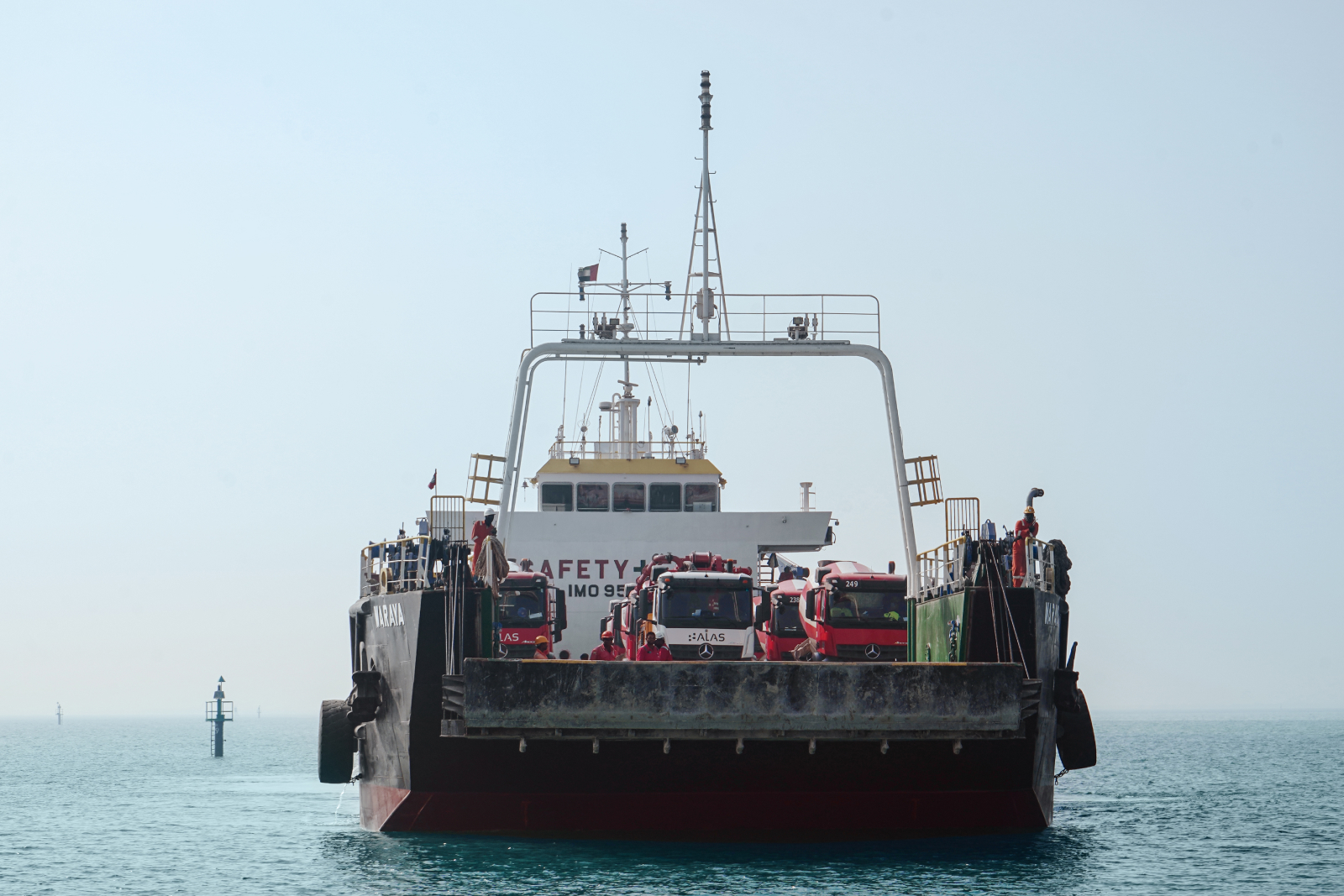
Long-Haul Concrete Supply for Offshore Projects
For ADNOC’s Hail & Ghasha and Al Omeirah offshore artificial island projects, delivered with main contractors NMDC and Jan De Nul, ALAS had to supply concrete and cement-bound granular material (CBGM) over exceptionally long sea journeys. With planned sailing times of 24 and 48 hours, respectively, the projects involved what is understood to be the longest concrete deliveries by sea in the UAE.
Over two months, ALAS’s R&D team developed and optimised mix designs to maintain the required concrete properties throughout transportation. The solution incorporated a high-performance retarder and superplasticiser to control cement hydration and preserve workability. Managing concrete temperature in high ambient conditions, with mixer drums exposed to direct sunlight during transit, added to the challenge.
The projects required 10,000 m³ of ready-mixed concrete across multiple grades and 47,000 m³ of CBGM. Deliveries were successfully completed over 48 months for Hail & Ghasha and 8 months for Al Omeirah, meeting project requirements despite challenging offshore logistics and real transport times of up to 36 hours. The projects demonstrate ALAS’s ability to adapt concrete technology and delivery processes to demanding offshore applications where conventional transport times are not feasible.
- 10,000 m³
- Ready-mixed Concrete
- 47,000 m³
- CBGM
- Up to 48
- Hours of Transport
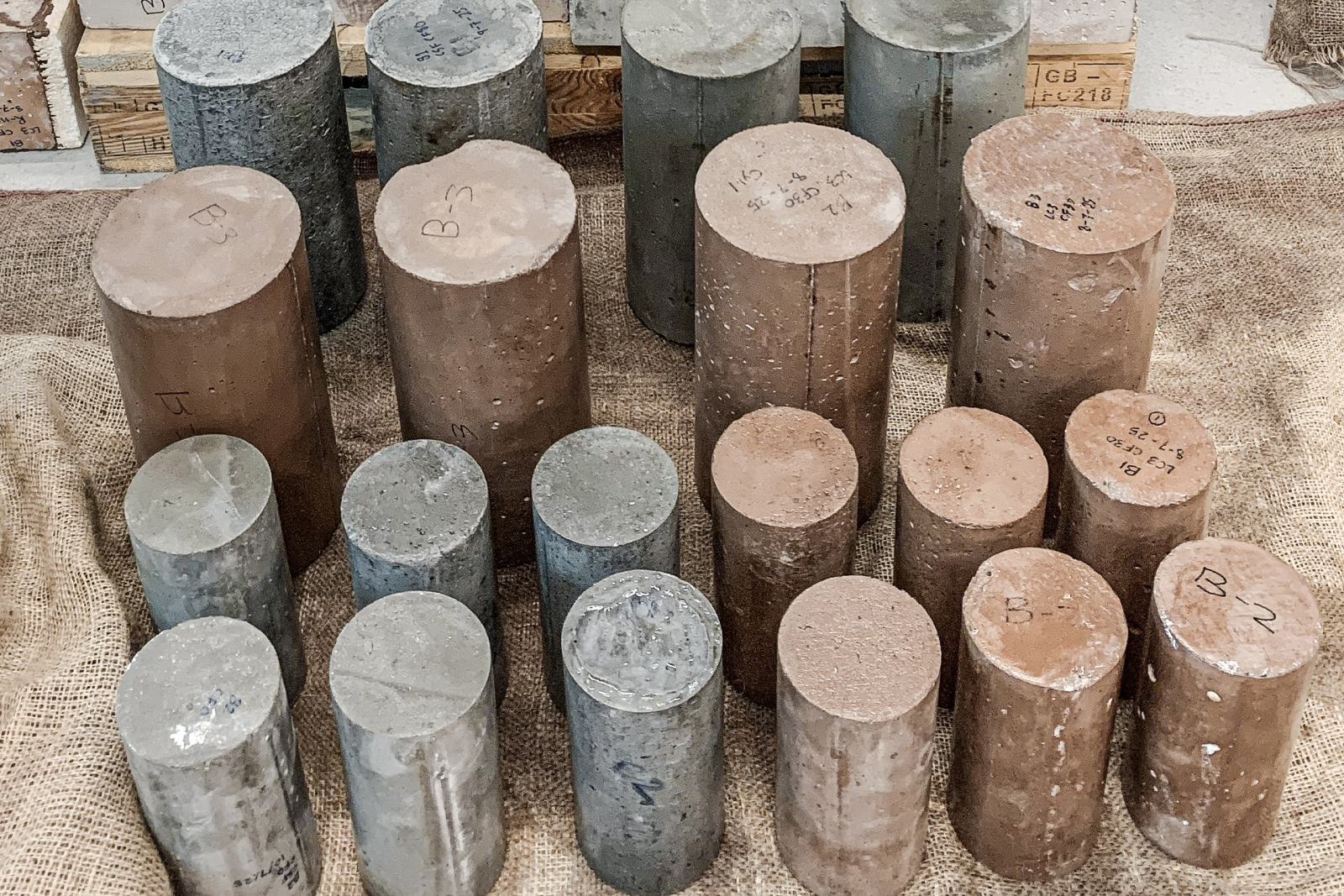
Industry–Academia Collaboration on Self-Sensing Concrete
Concrete is traditionally designed to provide strength and durability, but emerging research is exploring how it could also provide information about its own condition. In collaboration with New York University Abu Dhabi (NYUAD) and its AMBER Lab, ALAS supported research into smart, self-sensing concrete made using locally available materials.
The research, conducted by Aktham Alchaar, PhD Candidate and Senior Research Assistant at NYUAD, in collaboration with Prof. Kemal Celik and the AMBER Lab team, investigates how conductive fillers can change concrete’s electrical properties under mechanical loading. These changes could help identify stress and detect damage, offering potential for future structural health monitoring applications.
ALAS contributed industrial facilities, technical expertise and laboratory support. More than 80 samples were mixed, prepared and cast with support from the ALAS team as part of the experimental work. By bringing academic research into an industrial setting, the collaboration helps explore how emerging material technologies could be developed further for practical construction applications.
- 80+
- Samples Prepared
- 3
- Research Partners
- Smart Concrete
- Using Locally Available Materials

CarbonCure: Reducing Concrete’s Carbon Footprint
As the construction industry accelerates its efforts to decarbonise, ALAS Emirates Ready Mix has partnered with CarbonCure to incorporate captured CO₂ into concrete production. During mixing, the CO₂ reacts with components of the cement paste and becomes mineralised as calcium carbonate within the concrete.
ALAS has evaluated the technology through laboratory testing across different concrete mix designs and production conditions. Results indicated the potential to reduce cement content by up to 4% and CO₂ emissions by approximately 5% per cubic metre, depending on the mix design and application.
Integrated into existing production processes, the technology supports lower-carbon concrete solutions while maintaining the required performance. CarbonCure is available for customer projects across ALAS’s range of concrete mixes, offering a practical approach to reducing the environmental impact of concrete production.
- Up to 4%
- less cement
- ~5%
- Lower CO₂
- up to 5%
- higher compressive strength
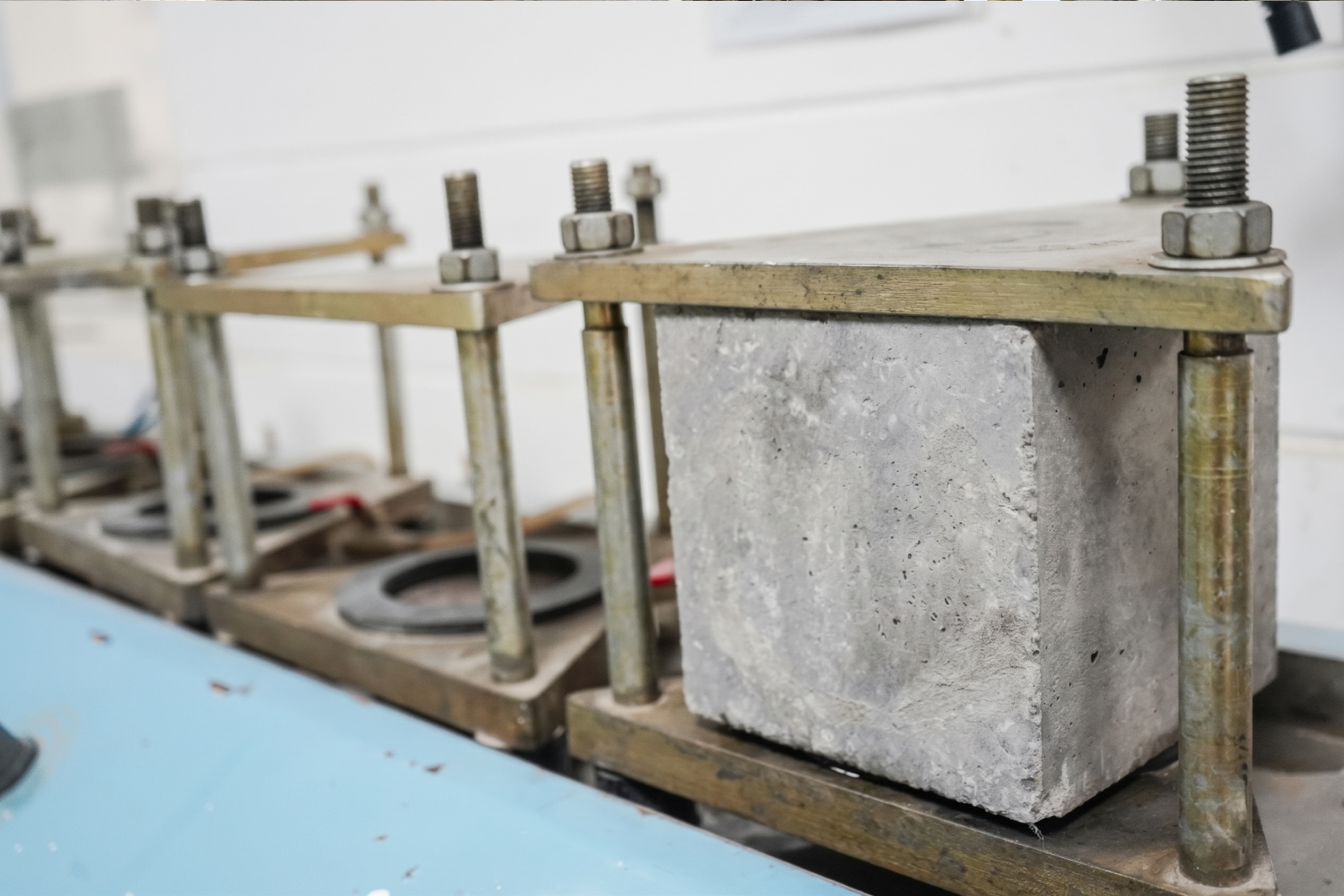
Ultra-high-strength concrete for military applications
Developing ultra-high-strength concrete for military applications required exceptional strength, durability and workability. For the UAE Military’s Command of Military Works (CMW), ALAS developed a 120 MPa pumpable concrete mix incorporating steel microfibres and slag aggregates.
The development involved 35 laboratory and plant trials over almost two months. The key challenge was achieving a very low water-to-cement ratio of 0.19 while maintaining sufficient flow and low viscosity for pumping. With a cement content of 650 kg/m³, the mix required precise optimisation of the admixture system to achieve the required performance characteristics.
The final mix achieved a flow of 570–600 mm after 60 minutes. At 28 days, compressive strength reached 155 MPa, exceeding the specified 120 MPa. Testing also recorded RCPT values of 400–600 coulombs and water penetration of just 0–3 mm, outperforming the specified limits.
The development demonstrates ALAS’s ability to engineer specialised concrete for demanding applications where strength, durability and pumpability must be achieved simultaneously.
- 35
- Lab and Plant Trials
- 155 MPa
- Compressive Strength at 28 Days
- 570–600 mm
- Flow After 60 Minutes
OUR PARTNERSHIPS
INNOVATION THROUGH COLLABORATION

Technology partnership supporting lower-carbon concrete solutions.

Technology partnership supporting solar energy integration across our operations.
Research and development collaboration focused on advancing concrete and construction materials.

Innovation partnership deploying specialized AI agents to automate our operations and logistics.


AHEAD OF WHAT'S POSSIBLE
Every challenge brings an opportunity to progress. We continue to explore new technologies, materials and approaches to enhance performance, increase efficiency and respond to the evolving demands of the construction industry.